
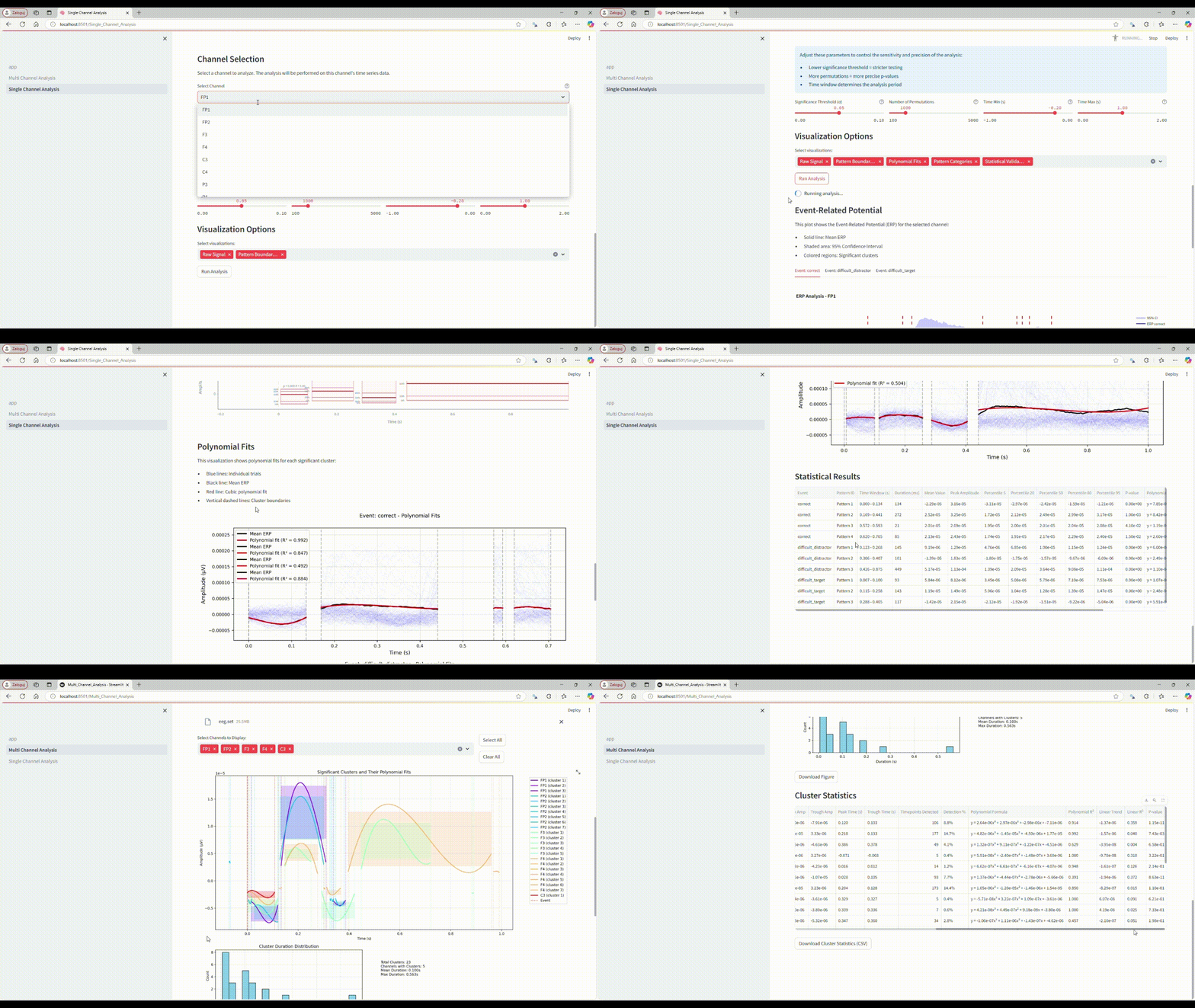
Each EEG signal is treated as a timeseries, sliced into cognitive-relevant segments and clustered to identify pattern commonalities across subjects.
We aggregate timeseries data and apply polynomial fitting algorithms to identify statistically significant patterns within the noise of neural activity.
Our algorithm integrates data across EEG channels, creating a spatial-temporal map of brain activity during various cognitive tasks.
The processed data is fed into ML algorithms including XGBoost, SVM, and recurrent neural networks to classify cognitive states.
Real-time identification of cognitive states including attention, focus, emotional response, and cognitive load.
Non-invasive methods to decode neural activity related to language processing and speech production.
Creating responsive systems that adjust based on the user's cognitive state.